Free Trade Warehousing Zones: A Driver of Local Economic Development
In an increasingly interconnected world, the transport of goods and services across borders has turned into a critical element of economic growth. special economic zone have emerged as powerful tools that empower businesses to thrive in this international landscape. These zones serve as designated areas where goods can be held, processed, and shipped again with minimal customs regulations, greatly enhancing the effectiveness of global trade. As local markets seek new ways to stimulate growth, Free Trade Warehousing Zones present a unique opportunity to attract foreign funding, enhance local companies, and generate jobs.
A benefits of establishing operations within a FTWZ are manifold. From financial perks to optimized logistics strategies, businesses operating in these zones can enjoy lowered operational costs and improved supply chain efficiency. Whether a business is looking to grow its import and export activities, improve e-commerce functions, or simply optimize storage infrastructure, understanding the details of FTWZs can serve as a driving force for achievement. This article will discuss the important role Free Trade Warehousing Zones play in making easier international trade and their positive impact on local markets, focusing on important features, compliance regulations, and investment opportunities that make these zones an attractive option for businesses today.
Benefits of Free Trade Warehousing Zones
These zones offer businesses significant benefits in terms of cost savings and operationally efficiency. By allowing companies to keep goods without the upfront payment of tariffs, these zones allow businesses to control cash flow better. This delay of duties allows companies to invest more capital into their operations, whether that includes expanding their inventory, enhancing technology, or improving workforce capabilities.
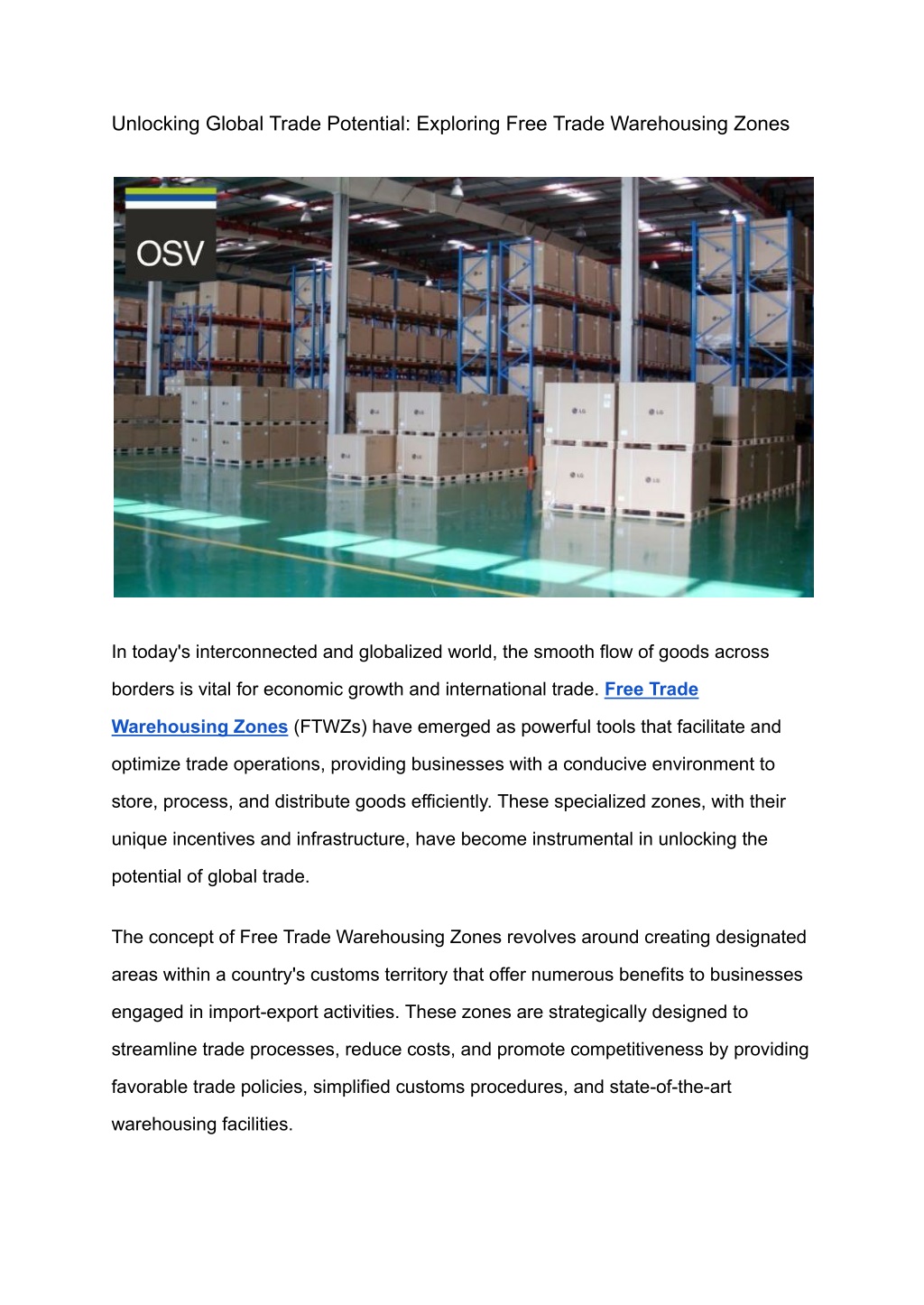
Another key benefit is the streamlining of logistics and customs processes. Free Trade Warehousing Zones often simplify the logistical processes, allowing easier operations for companies to manage their supply chains. This effective movement of goods can result in quicker turnaround times and shorter lead times, crucial for businesses that rely on timely deliveries to satisfy customer demand. Additionally, the facilities provided inside these zones, like modern warehousing infrastructure, supports the effective handling of goods.
Furthermore, businesses operating within Free Trade Warehousing Zones can tap into broader international markets. free trade zone and regulations in these zones encourage foreign investment and facilitate trade relationships. Companies can take advantage of the advantageous locations of these zones to access new customers and diversify their markets. By using these zones, local economies can attract more businesses, ultimately fostering growth and innovation in different sectors.
Key Features and Logistics Solutions
Free Trade Warehousing Zones highlight their distinct operational framework that allows firms to keep goods without immediate customs duties. One of the main features is the agility in inventory management, enabling organizations to respond rapidly to market demands. This adaptability is essential for firms dealing with high-demand products or seasonal goods, as it allows for deferred duty payments and inventory adjustments based on real-time sales data. Furthermore, the streamlined regulatory environment within an FTWZ facilitates speedier processing times for imports and outgoing shipments, enhancing overall efficiency.
Logistics solutions provided in these zones are tailored to optimize the supply chain for businesses, particularly for those in online commerce and international trade. With cutting-edge warehousing infrastructure, including innovative technology for tracking and inventory management, businesses can significantly boost their operational capabilities. Additionally, transportation networks connected to FTWZs ensure that goods can be shipped quickly and cost-effectively, reducing lead times and enhancing customer satisfaction.
Another significant feature is the access of specialized services, such as packing and labeling, which further facilitates the distribution process. Companies can engage local logistics providers who understand the unique requirements of operating within a free trade environment. These value-added services not only bolster efficiency but also allow companies to devote effort on their core operations, ultimately resulting in increased competitiveness in the global market.
Funding Avenues and Regulatory Adherence
FTWZs provide a unique landscape for businesses seeking to invest in global trade. These regions offer multiple opportunities, particularly for companies focused on international trade. By establishing a establishment in a trade warehousing area, businesses can leverage beneficial tax rates and regulatory benefits that enhance financial performance. Investment opportunities also extend to local infrastructure projects, technology deployment, and logistics support, making it an appealing opportunity for both foreign and domestic investors.
Compliance within a FTWZ is crucial for the effective operation of businesses. Companies must follow specific regulations set by the governing bodies overseeing these zones. Understanding customs procedures, import and export documentation, and local laws is critical to ensure uninterrupted operations and to avoid sanctions. It is wise for businesses to engage with law firms to navigate these standards effectively, thereby fostering a compliant yet flexible workplace.
The synergy between funding prospects and compliance creates a supportive atmosphere for business expansion. By attracting varied businesses, these zones contribute considerably to local job creation and enhance the overall financial environment. As companies leverage the facilities and favorable conditions of a Free Trade Warehousing Zone, they expand not only their own operations but also stimulate the local economy, driving advancements and market strength on a global scale.